Alphabet Tracing Activity Book for Kids: Building Foundations with Intentional Design
In the world of early childhood education and creative publishing, the tools we choose for young learners are more than just paper and ink; they are the scaffolding for future literacy and confidence. The Alphabet Tracing Activity Book for Kids from IKHLAS ARTISTRY represents a thoughtful approach to this critical stage. It is not merely a collection of worksheets but a carefully curated design asset intended to transform the often repetitive task of letter formation into an engaging, joyful experience. For educators, homeschooling parents, and even designers creating educational materials, understanding the value of such a resource is key to fostering effective and pleasant learning environments.
Visual Personality and Practical Appeal
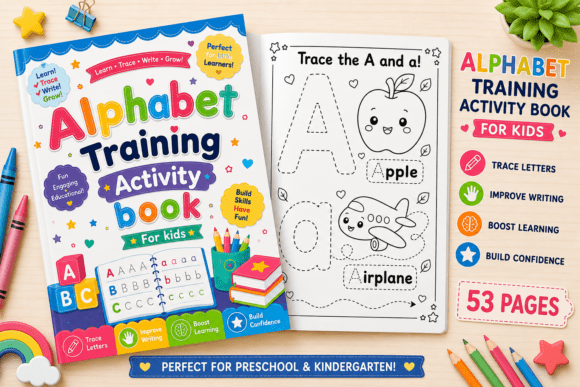
At its core, this activity book is built on a foundation of clarity and warmth. The visual style prioritizes easy-to-color designs and crisp, high-resolution illustrations (300 DPI), ensuring that whether used digitally or printed, the lines are clean and inviting. This isn't a chaotic, overstimulating workbook; its personality is calm, focused, and encouraging. The inclusion of cute, recognizable objects alongside each uppercase and lowercase letter serves a dual purpose: it reinforces letter-sound association and maintains a child's interest through creative expression. The overall appeal lies in its balance—it provides enough structure to guide a small hand in handwriting practice while leaving ample room for the personal touch of coloring, which is crucial for developing fine motor skills and a sense of ownership over the learning process.
From a design assets perspective, the book's layout is a lesson in effective visual hierarchy. Each page is a self-contained unit that guides the eye from the letter model to the tracing lines, and finally to the accompanying illustration. This predictable structure reduces cognitive load for a young child, allowing them to focus on the physical act of tracing. For the adult facilitator—be it a teacher or parent—this thoughtful organization means less time explaining instructions and more time supporting the child's progress. The professional 8.5" x 11" format is standard and printer-friendly, removing a common friction point for at-home use.
Strategic Applications Beyond the Classroom
While the primary audience is clear, the utility of a well-designed Alphabet Tracing Activity Book for Kids extends into several professional and creative spheres. For content creators and bloggers in the parenting, education, or homeschooling niche, this product can serve as a cornerstone for a content series. Imagine pairing printable pages with blog posts on "Making Handwriting Fun" or "Weekend Learning Activities." The high-quality PNG files are perfect for creating social media graphics, Pinterest pins, or Instagram stories that showcase the activity in action, adding tangible value to your digital content.
For entrepreneurs and small business owners operating in the educational supply or custom stationery space, this book exemplifies a premium digital product. It demonstrates how to package a practical need with an aesthetically pleasing and emotionally resonant brand identity—embodied by the IKHLAS ARTISTRY philosophy of creating with "care and pure intention." Studying its structure can inform the development of your own product lines, whether you're creating planners, journals, or other educational kits. The inclusion of multiple file formats (Ai, PDF, PNG, JPG) is a best practice for versatility, catering to different user needs from direct printing to further customization.
Integrating Intentional Design into Your Projects
The principles applied to this activity book are directly transferable to broader brand identity and editorial design projects. Its success hinges on understanding the end-user's emotional and practical needs—a fundamental tenet of good design. When evaluating any design asset, whether a font, a template, or a full workbook, ask these questions:
- Clarity of Purpose: Does the design immediately communicate its function? The tracing book does this through its layout and supportive visuals.
- User Experience: Is it intuitive and frictionless? The consistent page structure is a prime example.
- Emotional Resonance: Does it evoke the right feeling? The "cute objects" and focus on positive reinforcement aim to create comfort and joy, not pressure.
When choosing assets for your own projects, look for this same alignment. A creative font for a children's brand should have friendly, legible letterforms, much like the clear tracings in this book. A modern typography choice for a wellness blog should evoke calm and clarity. Always test font pairings and layouts in context—view them at the size and in the medium they'll be used. Review all included styles and formats to ensure they meet your project's technical and aesthetic requirements. Most importantly, consider the licensing for commercial use, a critical step for any professional application.
Ultimately, the Alphabet Tracing Activity Book for Kids is more than its 53 pages. It is a case study in purposeful creation, where every element—from the file resolution to the thank-you page—is considered. It reminds us that the most effective tools, whether for teaching a child their ABCs or building a brand, are those crafted with attention, understanding, and a genuine desire to create a positive experience. By applying this mindset to your selection and use of design assets, you elevate the quality and impact of your own work.